Press release —
Unpack. Set up. Get started.
Conformity assessment carried out at the factory means industrial scales are ready for use more quickly.
Bench and floor scales are used as part of the daily routine in many industrial companies. They are in regular use for goods receipt and order picking, for checking raw materials and finished products, and for accurately determining weights in production and quality assurance. Depending on the application, they must not only be precise and robust, but also meet the requirements of legal metrology.
This is precisely where a seemingly simple procurement process can become a challenge: the new scale has been delivered and is technically ready for use, but cannot yet be used without being prepared to legal metrology requirements. What sounds like a mere formality on paper can mean additional coordination, documentation and, in the worst-case scenario, delays in the start of production with the new scale.
The crucial question is therefore: how quickly can a delivered scale be turned into a production asset that is actually ready for use?
From verification capability to legal readiness for use
A scale may be suitable for legal-for-trade applications, but that alone does not mean it can be put into operation immediately. What was previously commonly referred to as ‘calibration ex works’, ‘initial calibration’ or ‘manufacturer’s calibration’ is now carried out through a conformity assessment when the instrument is first placed on the market. This assessment confirms that the measuring instrument complies with the applicable legal and metrological requirements.
For operators, having this assessment completed by the manufacturer before delivery simplifies commissioning. There are fewer steps to organise on site, and the scale can be integrated into the intended process more quickly. “For the customer, what matters is not when a scale leaves the factory, but when they can use it reliably and in compliance with the law for their process. The more necessary steps that are carried out before delivery, the less effort is required during commissioning,” says Nils Hubrich, Product Manager at Minebea Intec.
Fewer interfaces, greater planning certainty
When selecting an industrial scale, the focus is often on accuracy, load capacity, robustness, connectivity and purchase costs. The organisational effort involved in commissioning, on the other hand, is often underestimated.
If further tests or formal procedures need to be coordinated after delivery, this creates additional work. Deadlines must be agreed and internal resources allocated. If key requirements are already taken into account by the manufacturer, this burden is shifted away from the operator.
This offers five main advantages:
- faster commissioning
- less coordination effort
- greater planning certainty
- clear responsibilities regarding commissioning
- cost savings through more cost-effective, factory-based calibration compared with on-site calibration supervised by the authorities
Please note: conformity assessment at the time of placing the equipment on the market does not replace the operator’s subsequent obligations. The applicable requirements for use and calibration must also be taken into account during ongoing operation.
Good weighing technology takes the process into account
This is precisely where the expertise of an experienced scale manufacturer comes to the fore. An industrial scale consists of more than just a weighing platform, load cells and a display. Good weighing technology takes into account, right from the start, the conditions under which the system will later be used and how easily it can be integrated into existing processes. “Precision alone does not make a good industrial scale. What matters is the overall package comprising measurement quality, robust construction, repeatability, ease of use, integration and the assurance that the scale can be used in the intended process in compliance with regulations”, says Nils Hubrich.
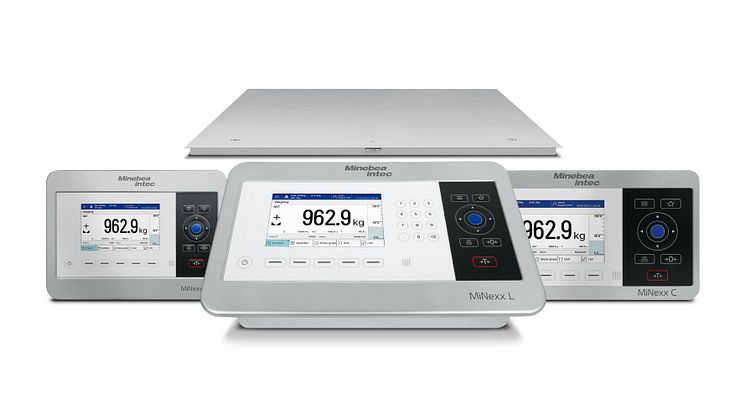
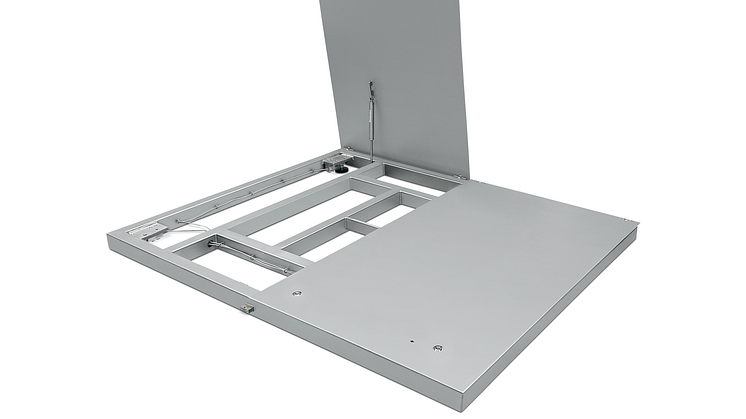
Minebea Intec also adopts this holistic approach with the new MiNexx® generation of bench and floor scales. With this range, the company has fundamentally enhanced its portfolio for industrial weighing applications. The focus is on high weighing accuracy and robustness, as well as user-friendliness, connectivity, cyber security and integration into industrial processes that are as straight forward as possible.
The core function remains unchanged: the scale must measure reliably. However, the surrounding requirements have increased significantly. Today, weighing data is increasingly incorporated into production and quality assurance processes; systems communicate with higher-level control systems; and operation should remain as simple as possible despite growing functionality. “Industrial scales are now an integral part of networked production processes. Our aim in development is therefore not only to provide a precise measuring instrument, but a solution that integrates as seamlessly as possible into the user’s process,” says Nils Hubrich.
Reducing effort before it arises
Whether an industrial scale is the right choice is therefore not determined solely by its technical specifications. Just as important is the question of how much effort it requires before it can perform its actual function.
A manufacturer that considers weighing technology, electronics, software and regulatory requirements as a unified whole can reduce this complexity at crucial points. Against this backdrop, the fact that Minebea Intec supplies industrial scales for relevant applications that are already conformity-assessed is more than just an additional service. It represents an approach that takes the user’s requirements into account beyond the mere measurements.
After all, the best industrial scale is not just the one that measures precisely. It is the one that integrates as seamlessly as possible into the process and performs its job reliably from the very first day of operation.
Topics
Categories
Minebea Intec is a leading global manufacturer of industrial weighing and inspection technologies. Headquartered in Hamburg, Germany, the company offers products and services that have stood for innovation, performance and reliability for more than 150 years. The product portfolio includes high-resolution platform scales, load cells, hopper and silo scales, checkweighers, metal detectors, X-ray and visual inspection systems as well as intuitive software solutions. Over 900 employees at 18 locations increase the precision and efficiency of industrial customers' weighing and production processes. A network of 215 partners in 67 countries complements the global player's sales and service locations. The high performance and distinctive German quality are reflected in the brand promise "the true measure".
Minebea Intec is part of the MinebeaMitsumi Group, a leading supplier of high-precision production parts such as ball bearings and motors as well as high-quality electronic components such as sensors, antennas and IoT solutions. The Group, which is headquartered in Tokyo and has around 81,000 employees worldwide, reported consolidated net sales of 1,644,387 million yen (approx. 9.5 billion euros) for the 2026 financial year.